

A pharmaceutical indenting company was spending a full working day per inquiry — manually reading buyer emails, extracting line items, contacting suppliers, comparing responses, and composing quotes. We built an AI-powered platform that automates the entire procurement lifecycle, with human approval gates at every stage.
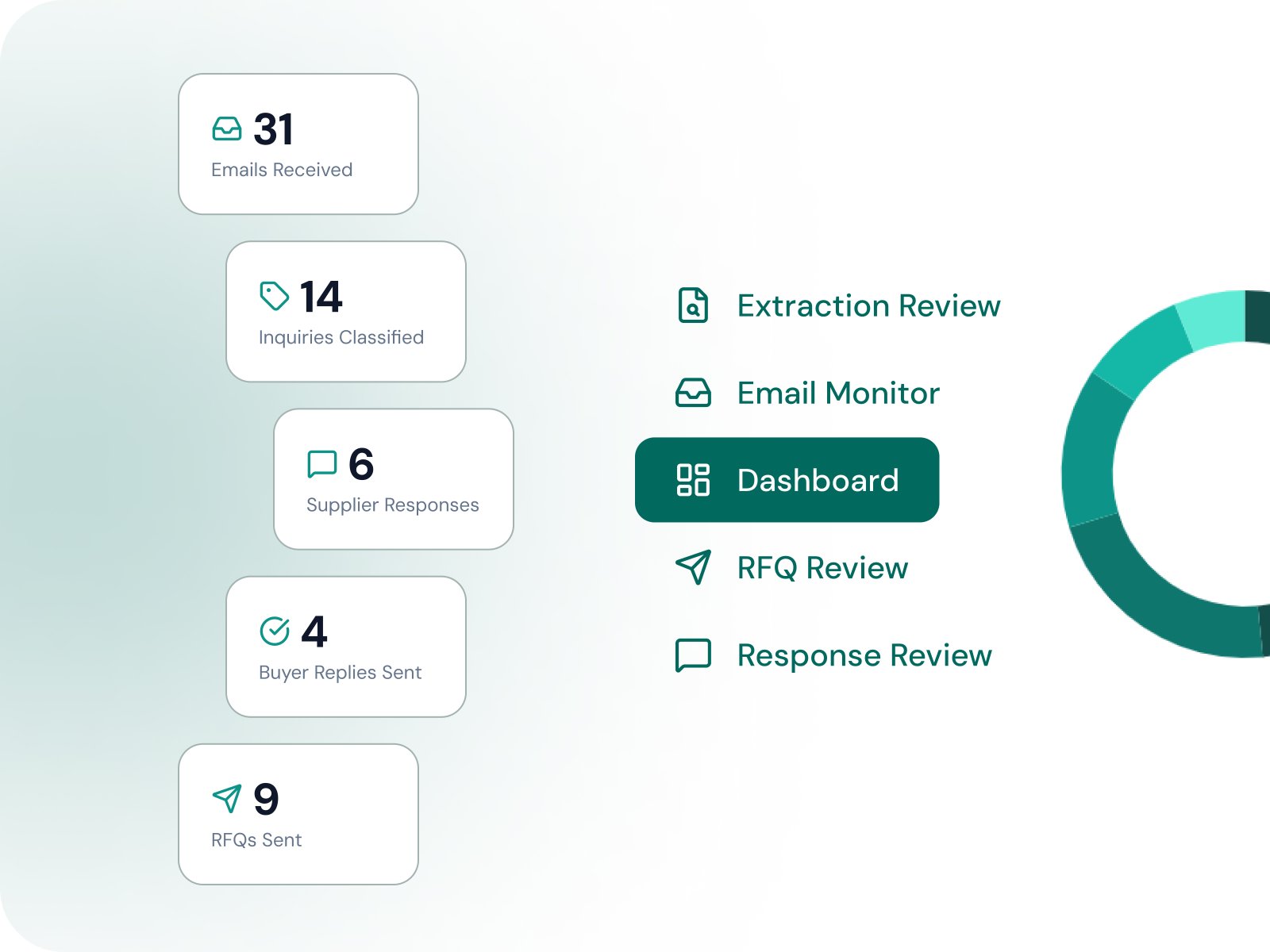
Processing Time Reduced
8 hours → 4 minutes per inquiry
Workflow Stages Automated
End-to-end procurement lifecycle
Extraction Confidence
Per-item AI confidence scoring
Human-in-the-Loop
Approval gates at every stage
Industry
Pharmaceutical
Indenting & trading — API/raw material procurement
Services
AI Automation
Full lifecycle workflow automation, email processing, AI extraction
Timeline
4 Sprints
Foundation — Extraction — Supplier Intelligence — Response Automation
Team
6 Specialists
1 Strategist · 2 Engineers · 1 AI/ML Specialist · 1 QA · 1 Architect
Technology
Python · OpenAI
OCR · NLP · IMAP/SMTP · Microservice Architecture
The client is a pharmaceutical indenting company — an intermediary that sits between pharma manufacturers (the buyers) and API/raw material suppliers. Their procurement agents receive buyer inquiry emails containing 8–15 API line items each, with product codes, quantities, units, incoterms, and payment terms. Every single inquiry triggered the same grueling manual cycle.
An agent would read the buyer's email, manually parse and copy each line item, figure out which suppliers to approach based on memory and scattered spreadsheet history, type individual RFQ emails to each supplier, wait for replies, manually extract pricing and terms from supplier responses, and finally compose a formatted quote-back email to the buyer.
The email formats were never consistent. Buyer inquiries arrived as plain text, Excel attachments, PDFs, or a mix of all three. Supplier responses were equally unstructured — different currencies, different incoterms, different delivery formats. Every email required a human to read, interpret, and re-enter data by hand.
The core problem: That entire cycle — from buyer email to buyer reply — took approximately 8 hours per inquiry. The business couldn't process more inquiries without hiring more agents. Revenue growth was capped by headcount, not by market demand.
A purpose-built system designed around the specific constraint — not a generic tool configured to fit.
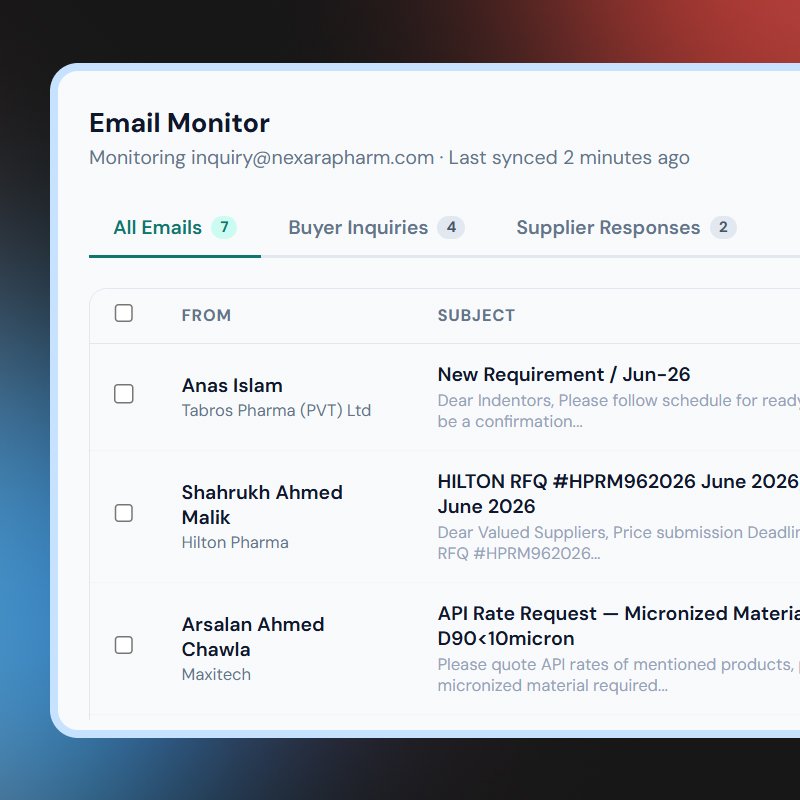
System watches the client's designated inbox in real-time via IMAP/SMTP. Every incoming email is automatically detected and classified using AI — categorized as a buyer inquiry, a supplier response, or irrelevant. Only relevant emails enter the processing pipeline. No manual sorting. No missed inquiries.
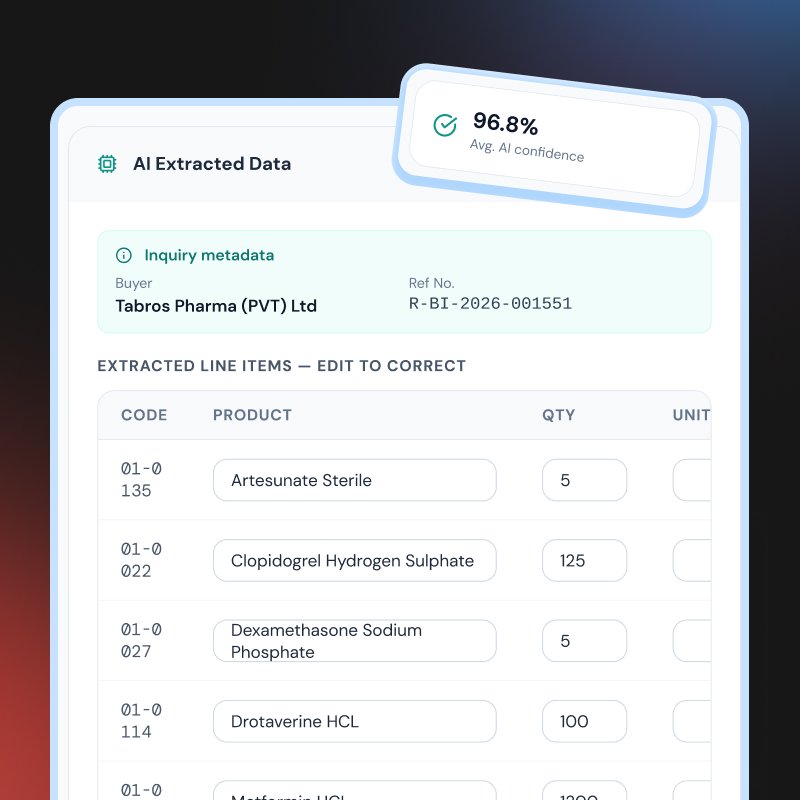
For each buyer inquiry, the AI engine parses both the email body and any attachments — Excel files, PDFs, images — using a combination of NLP and OCR. It extracts every line item: product name, product code, quantity, unit, payment terms, incoterm, and shipping mode. Each extracted item receives a per-item confidence score (94–99%), so the agent can see exactly how certain the system is before approving.
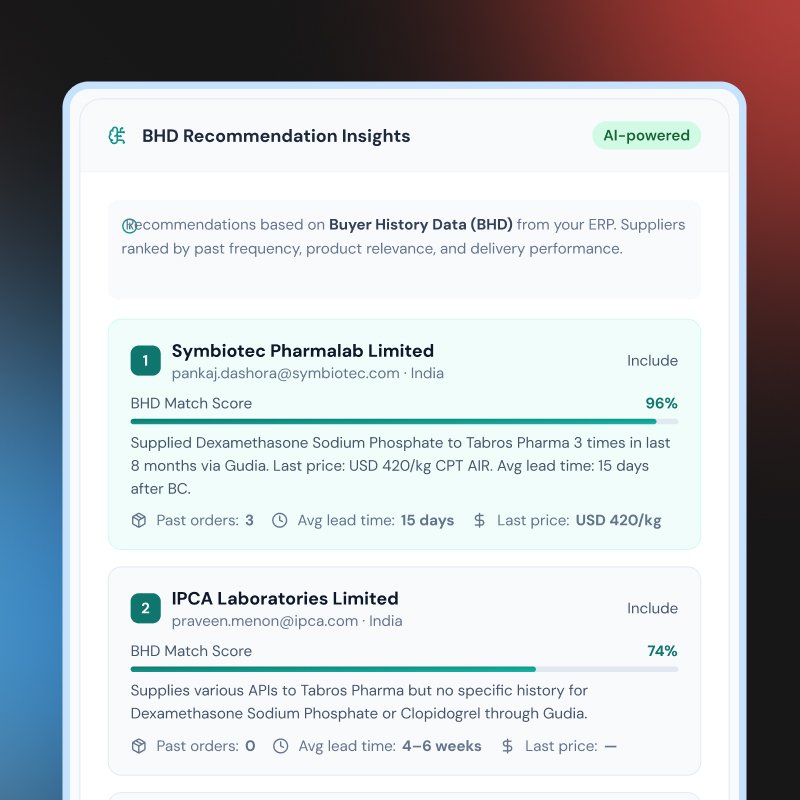
Once the agent approves the extracted line items, the system consults the client's historical Buyer History Data via ERP APIs. It analyzes past buyer-supplier relationships, historical fulfillment rates, lead times, and product category relevance. For each product, it ranks approved suppliers and recommends the best match — with full manual override capability.
Platform auto-generates correctly formatted Request for Quotation emails using the company's standard templates. Each RFQ is pre-filled with the relevant product details, quantities, and terms — traced back to the original buyer inquiry via a linked reference system. The agent reviews, adjusts if needed, and sends with one click.
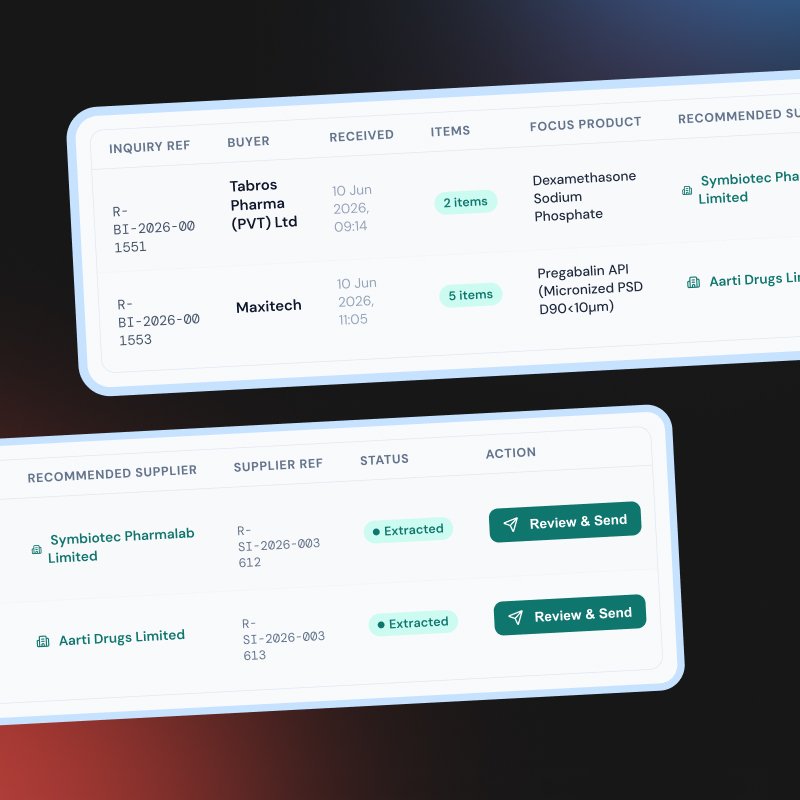
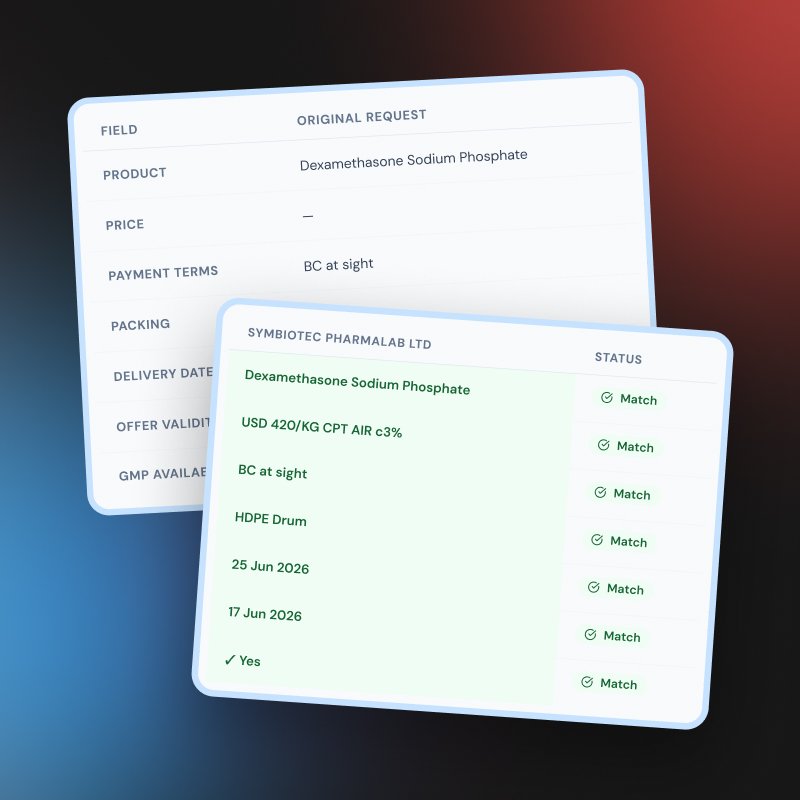
When suppliers reply, the system ingests their emails and extracts all offer terms — price, currency, incoterm, commission, packing details, delivery date, offer validity, and GMP certificate availability. It then cross-references the response against the original inquiry parameters and flags deviations: mismatched quantities, different incoterms, missing fields, or pricing anomalies.
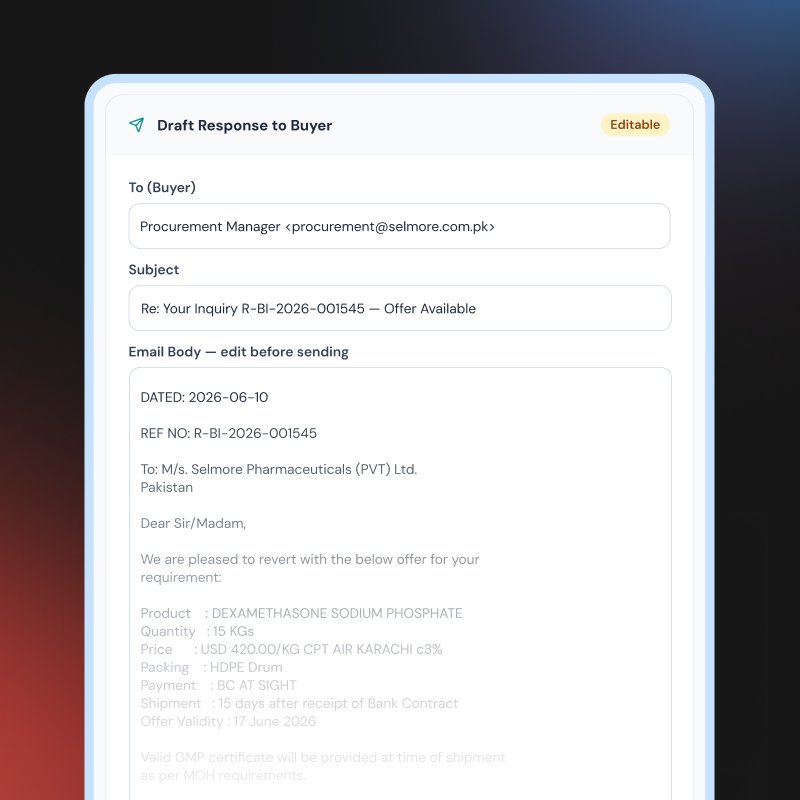
System composes the final formatted reply to the buyer with the best supplier offer. All ERP fields are pre-populated — supplier code, item code, unit cost, currency, incoterm, payment terms, delivery days, PO reference — ready for direct entry into the client's system. The agent reviews, makes any final adjustments, and the quote is sent. What used to take 8 hours now takes 4 minutes of human review.
No bolt-on integrations. Every tool chosen for the specific constraints of this project.
The full procurement cycle — from buyer inquiry email to formatted buyer reply — collapsed from ~8 hours to ~4 minutes of human review. A 99% reduction in processing time per inquiry. The system handles email ingestion, data extraction, supplier matching, RFQ generation, response parsing, and reply composition — autonomously, around the clock.
The platform processes buyer inquiries with 8–15 line items, across any email format — plain text, Excel, PDF — with extraction confidence scores consistently between 94% and 99%. Supplier recommendations are data-driven, pulling from real transaction history rather than agent memory or scattered spreadsheets.
The procurement agents didn't lose their jobs — they got their jobs back. Freed from 8 hours of mechanical data-shuffling per inquiry, they now spend their time on what actually requires human intelligence: negotiation, supplier relationship management, and complex judgment calls. Human approval gates remain at every stage. The system accelerates the work. The human owns the decisions.
Before
After
No pitch. No pressure. Tell our AI about your challenge — it will match you with the most relevant solution and show you exactly how we'd approach it.
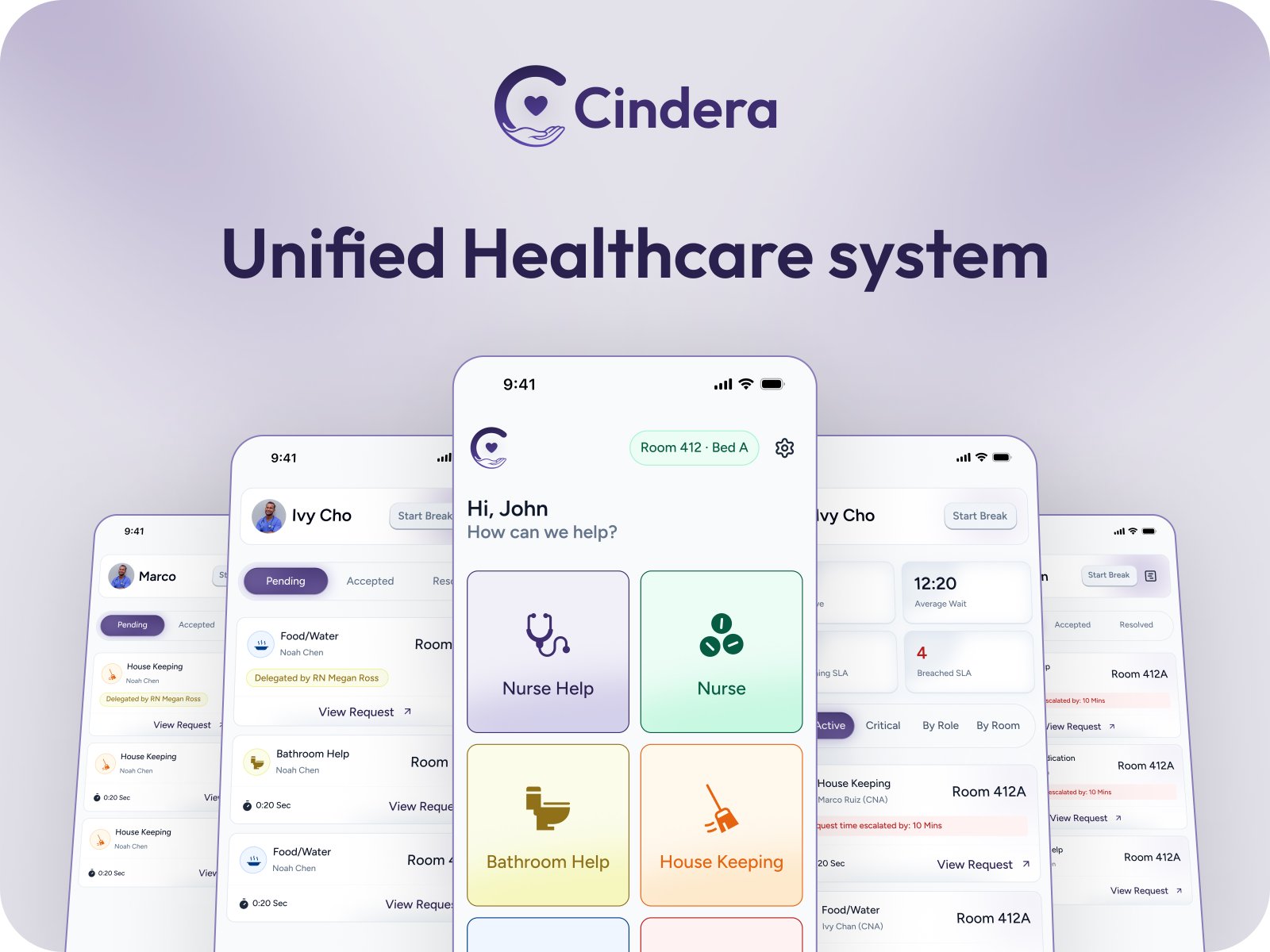
Cindera is a BYOD patient communication platform that lets hospitalized patients submit categorized requests from their own phones, routes each request to the right staff role, and gives patients real-time visibility from "sent" to "resolved."
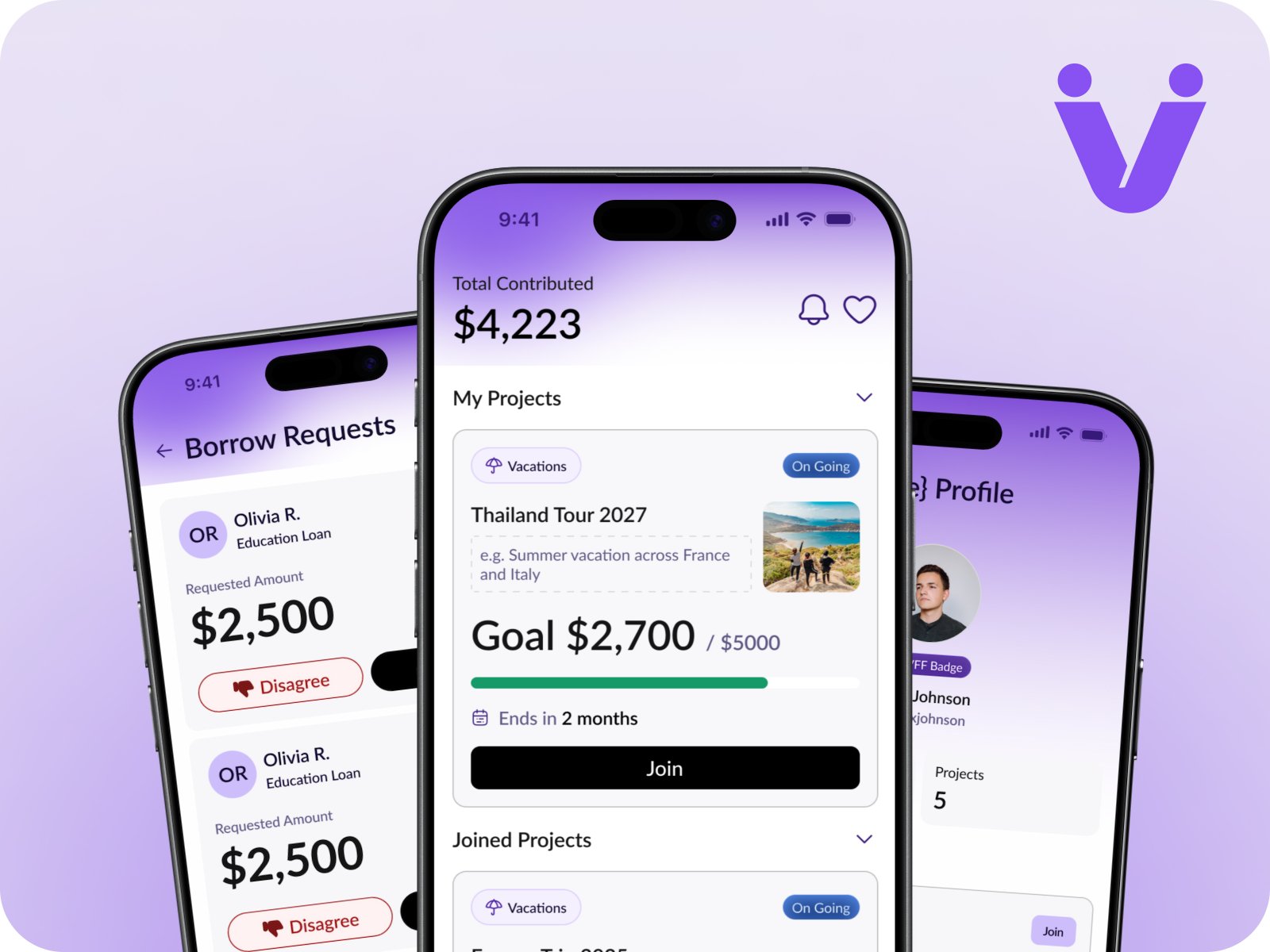
Informal group savings — susu, chama, tontine — have existed for generations with no structure, no accountability, and no app. We designed Vesties: a full-stack mobile platform that gives trusted groups a democratic, transparent, and governed way to pool money, borrow from the collective pot, and invest together — all from their phones.